

Guide
Parent Support
Support families with Jolly Phonics parent guidance, home practice ideas, meetings and resources for phonics learning.
Parent Support
Guidance and tools to build strong home–school partnerships
Support From Home
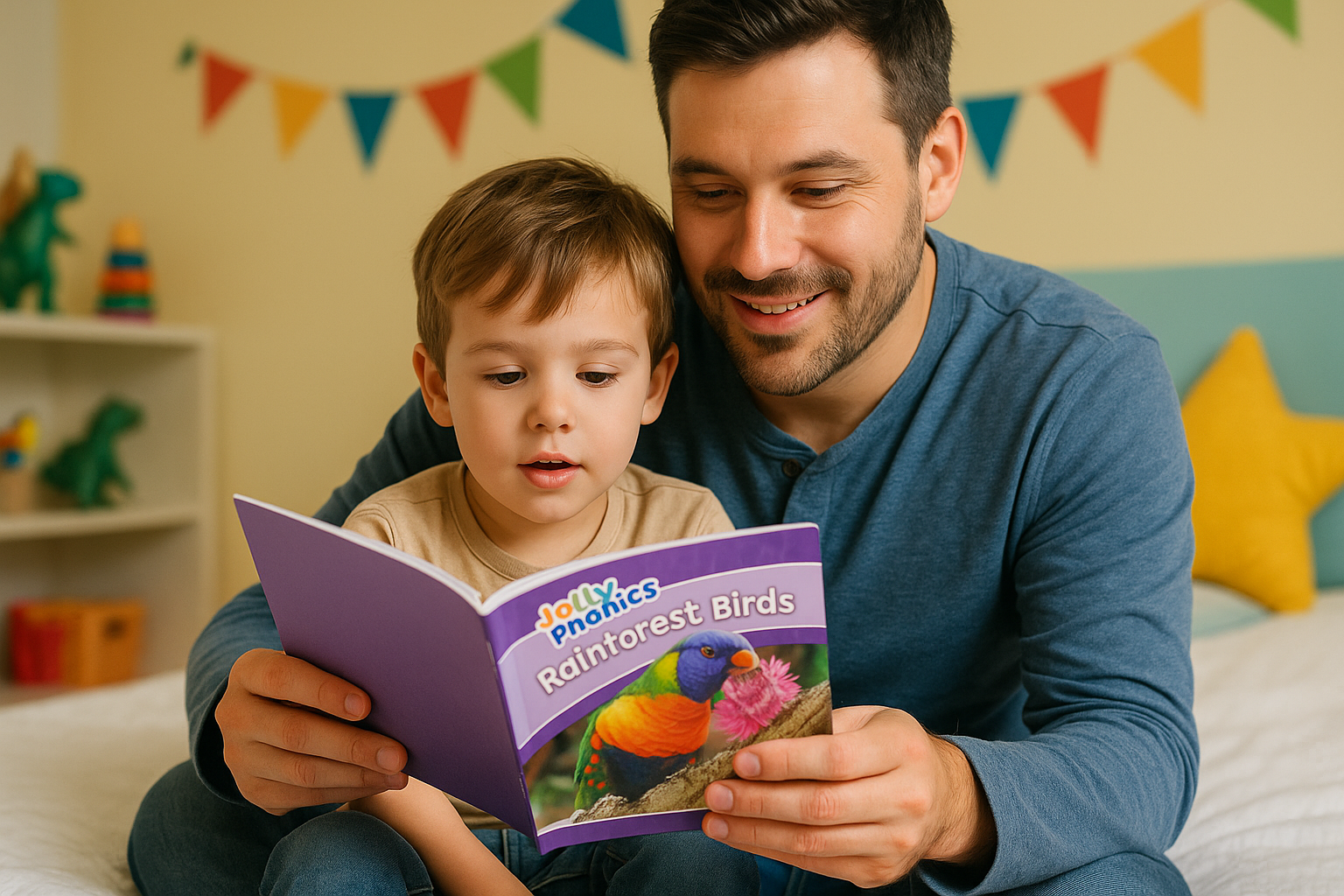
Parental involvement can play an important role in a child's phonics development. With help at home, children develop fluency with the skills and tend to progress more quickly and with greater confidence. Even small moments – revisiting the letter sounds, blending words or singing songs – can significantly boost achievement.
However, parents are additional help and should only be asked to consolidate knowledge and practice skills their child has already been taught in class. Their help and support is particularly important for those children with poor memories, and so whom need more practice learning the letter sounds. Similarly those who find blending, segmenting and writing words difficult also need more practice.
Teachers are encouraged to actively involve parents by providing a few simple, practical ideas and activities they can use to support the children at home. Reinforcement outside of the classroom builds consistency, strengthens memory and helps children become more independent learners.
Parent Resources
Hold a Parents’ Meeting
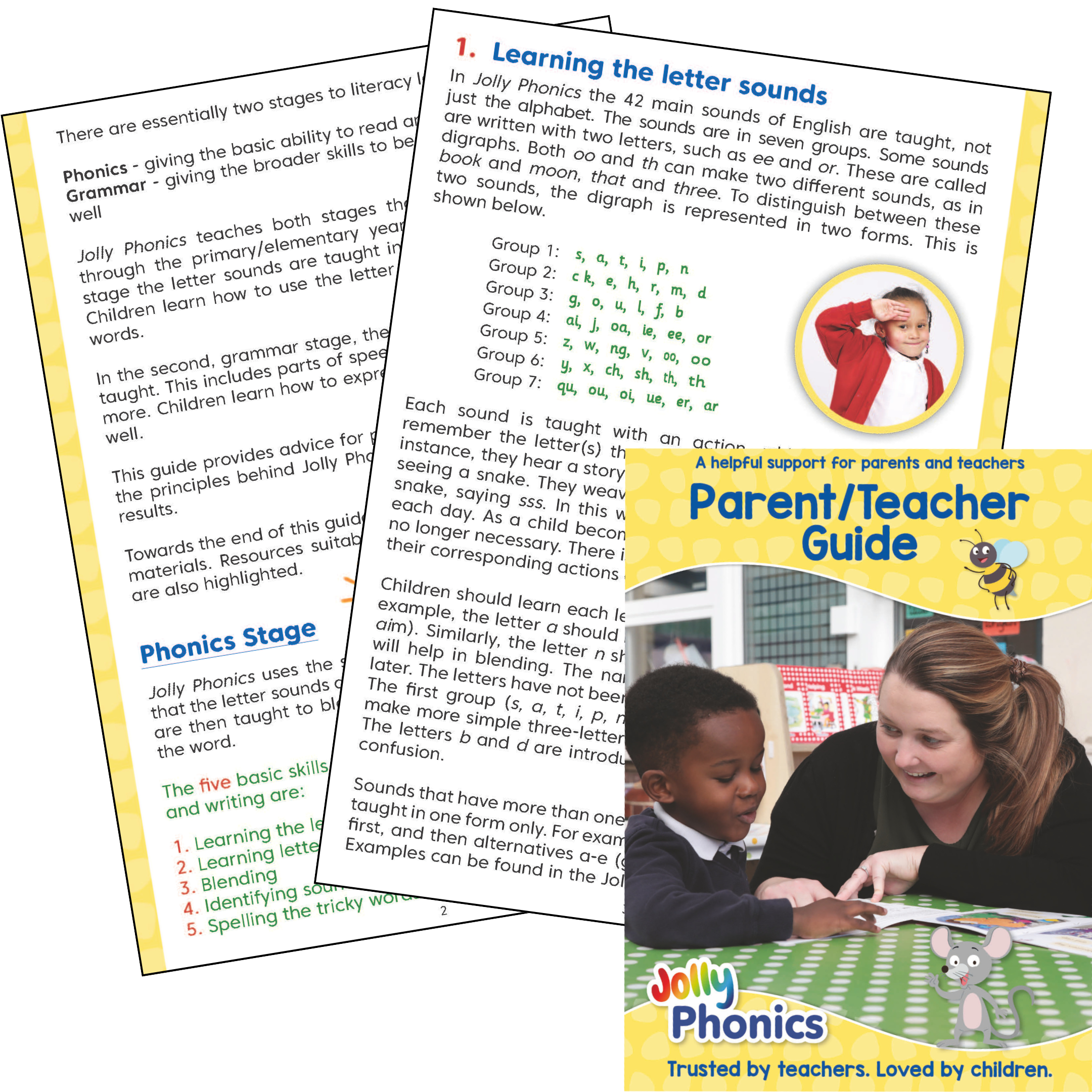
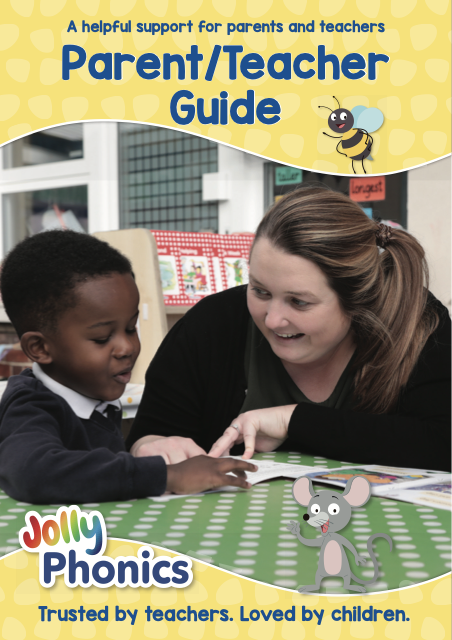
One of the best ways to engage parents is to hold a meeting at the beginning of the year to explain the Jolly Phonics or Jolly Classroom programme. A free pamphlet is available from Jolly Learning to hand out to parents. Use the meeting to provide an overview of how phonics is taught and how families can help at home.
-
Explain Systematic Synthetic Phonics (SSP)
Explain Systematic Synthetic Phonics (SSP)Explain that SSP is a teaching method that helps children hear the sounds in words and connect them to letters. Children are taught to blend the sounds together to read words and listen for the sounds and know which letter/s to write to spell words. This approach develops confident and independent readers and writers. We initially teach letter sounds, not names, as it is the sounds that are used in words. For example, the sounds /c-a-t/ can be blended together to make the word ‘cat’ but the letter names /cee-ai-tee/ cannot.
-
Highlight Why Phonics Is Important
Highlight Why Phonics Is ImportantExplain that SSP teaches the alphabetic code of the English language in a simple and logical way. It enables children to understand how words work for both reading and writing, and provides the foundation for lifelong reading and writing success. Learning whole words by sight is extremely difficult and time consuming and fails many children. Jolly Phonics was developed by teachers and has proven highly effective in helping children succeed early.
-
Demonstrate Letter Sounds, Actions and Songs
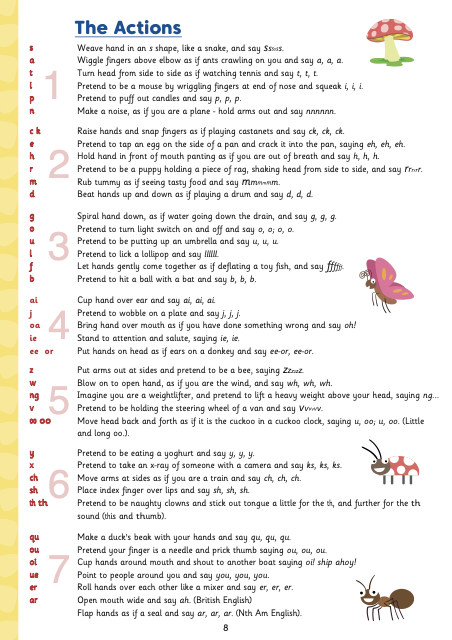
Demonstrate Letter Sounds, Actions and SongsShow parents a small selection of letter sounds so they can see how each one is introduced, along with its corresponding action and song. Demonstrate how these can be practised at home using the videos on the Jolly Learning YouTube channel. (For parents who want support with how to say the sounds correctly, they can watch the 'Learn the 42 letter sounds' video while the children can watch the songs videos).
-
Explain Blending and Segmenting
Explain Blending and SegmentingDemonstrate how blending helps children read unfamiliar words and how segmenting enables them to spell and write independently. Explain that words should only be sent home for practice once these skills have been taught in class - blending for reading and segmenting for spelling - to ensure success and build confidence. Once pupils can segment words in class, short word lists can be sent home for simple dictation practice.
-
Encourage Regular Practice
Encourage Regular PracticeExplain that short daily practice will greatly benefit their child, helping them learn and remember the letter–sound correspondences and actions. After a while, the children should say only the sound without doing the action. Emphasise that quick and accurate recognition of the letter sounds is vital for reading and writing success, and encourage parents to revisit these regularly at home.
-
Use Home Sound Books
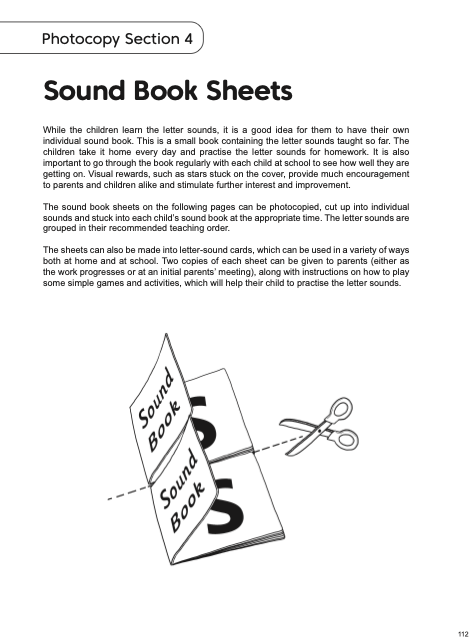
Use Home Sound BooksShow parents the home sound books that will be used to reinforce learning. These can go home for daily review and are a simple yet powerful way to help children practice the letter sounds taught in class.
-
Empower Children to Teach Back
Empower Children to Teach BackEncourage children to ‘teach’ their parents the letter sounds and actions they’ve learned in class - this builds confidence, strengthens memory, and creates a positive home–school connection.
-
Recognise Differences in Learning Pace
Recognise Differences in Learning PaceHelp parents understand that some children have weaker memories and need more practice to retain the letter sounds. Explain that around 25% of children fall into this group and simply require extra repetition and reinforcement. With consistent support at home and in school, these children can learn perfectly well and make excellent progress.
-
Share Parent Letters and Resources to Guide Families
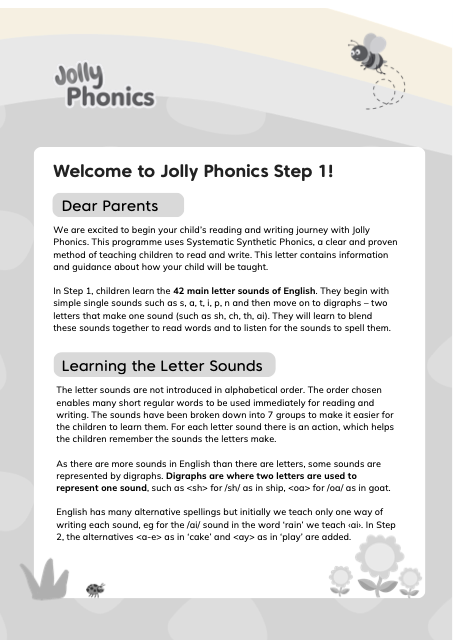
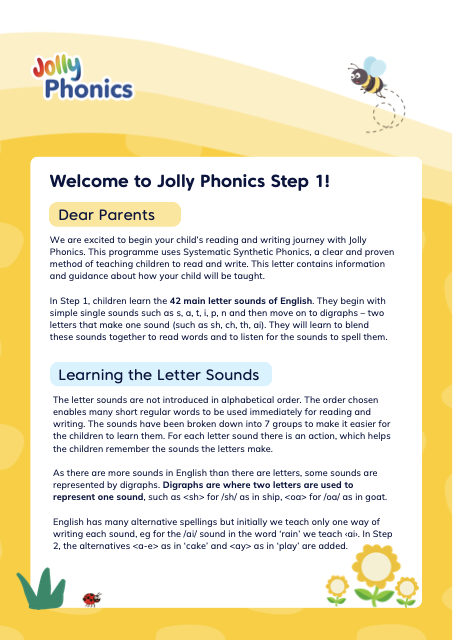
Share Parent Letters and Resources to Guide FamiliesThe first Parent Letter below can be given out at the beginning of Step one. This letter will help parents to understand how children are learning phonics at school and how families can help at home.
Support Families with Free At-Home Phonics
Build strong early reading skills with free videos and phonics practice at home
Our YouTube channel provides engaging songs and helpful guidance to make phonics fun at home. Alongside this, our free Home Phonics app gives parents structured lessons that reinforce the teaching you do in class.
Winners for Home Practice
-
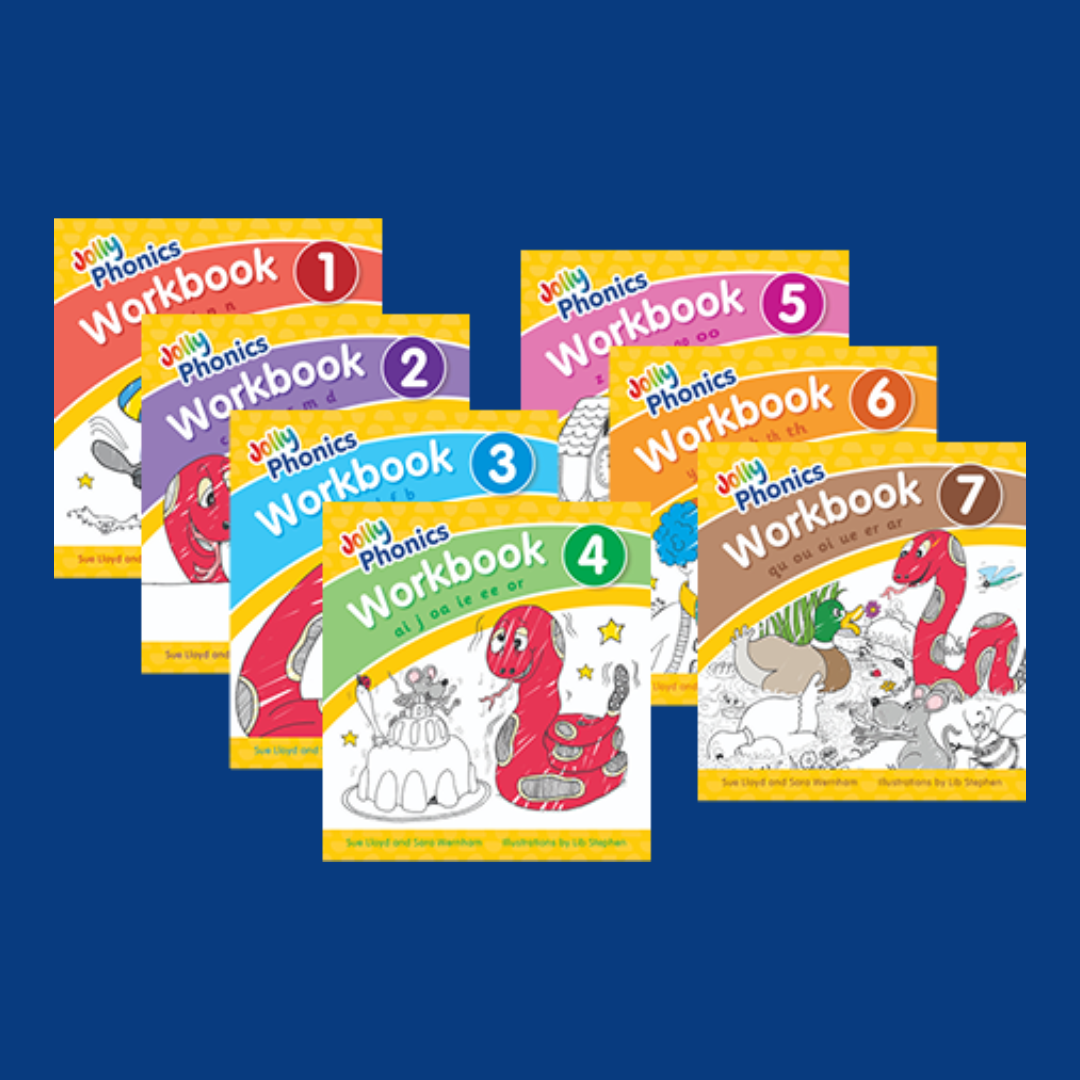
Jolly Phonics Workbooks
Jolly Phonics Workbooks -
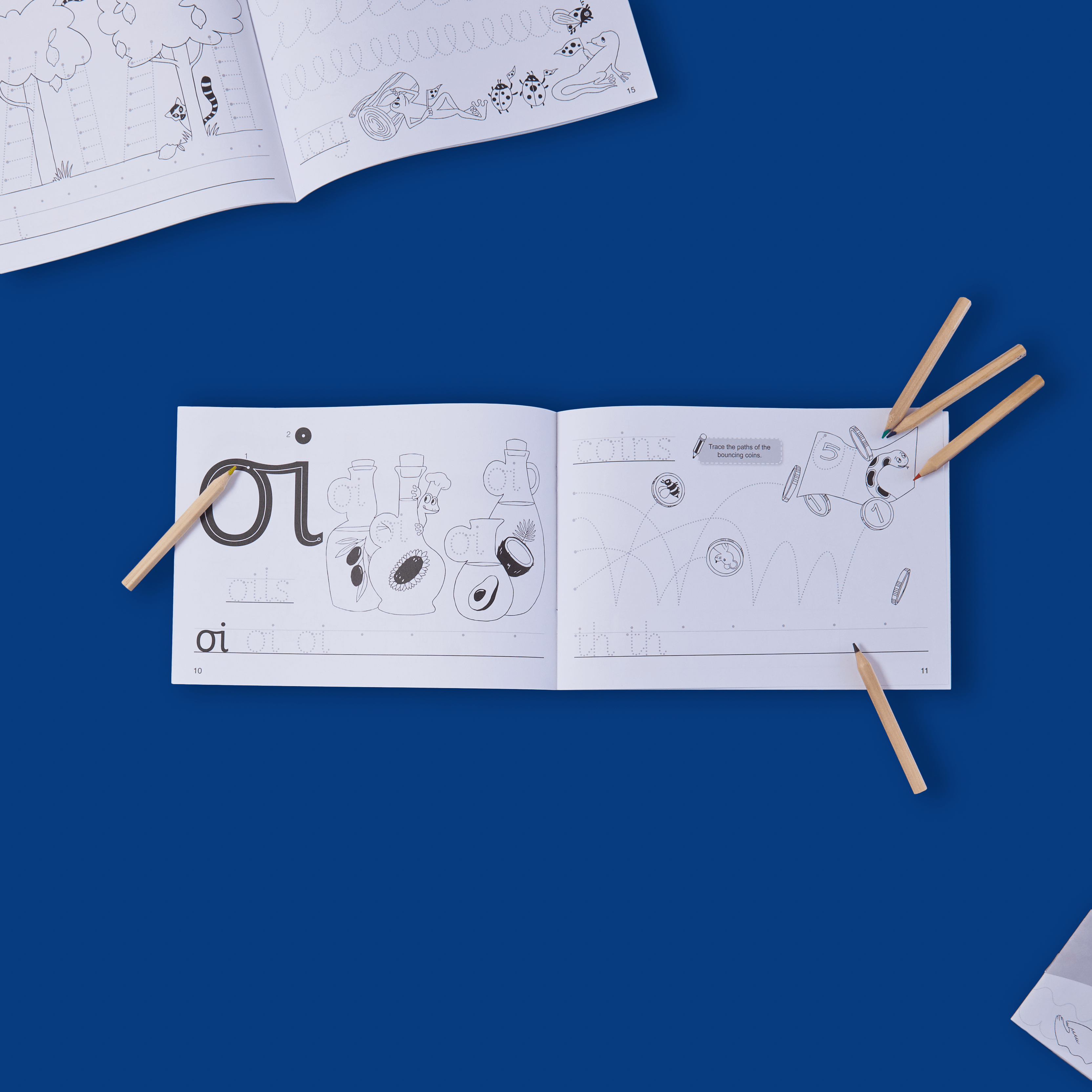
Jolly Phonics Handwriting Books
Jolly Phonics Handwriting Books -
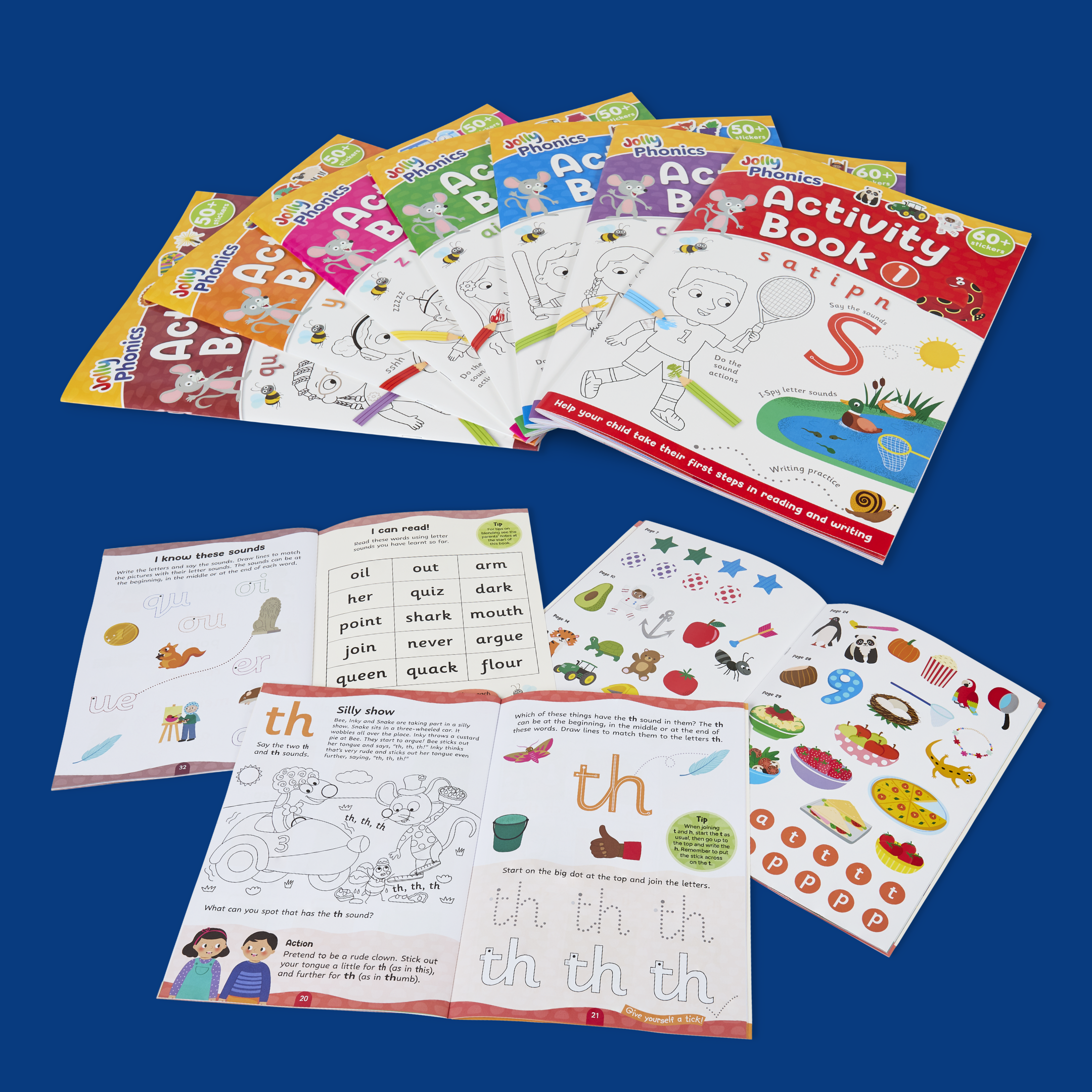
Jolly Phonics Activity Books
Jolly Phonics Activity Books
Perfect to share with parents for extra practice.